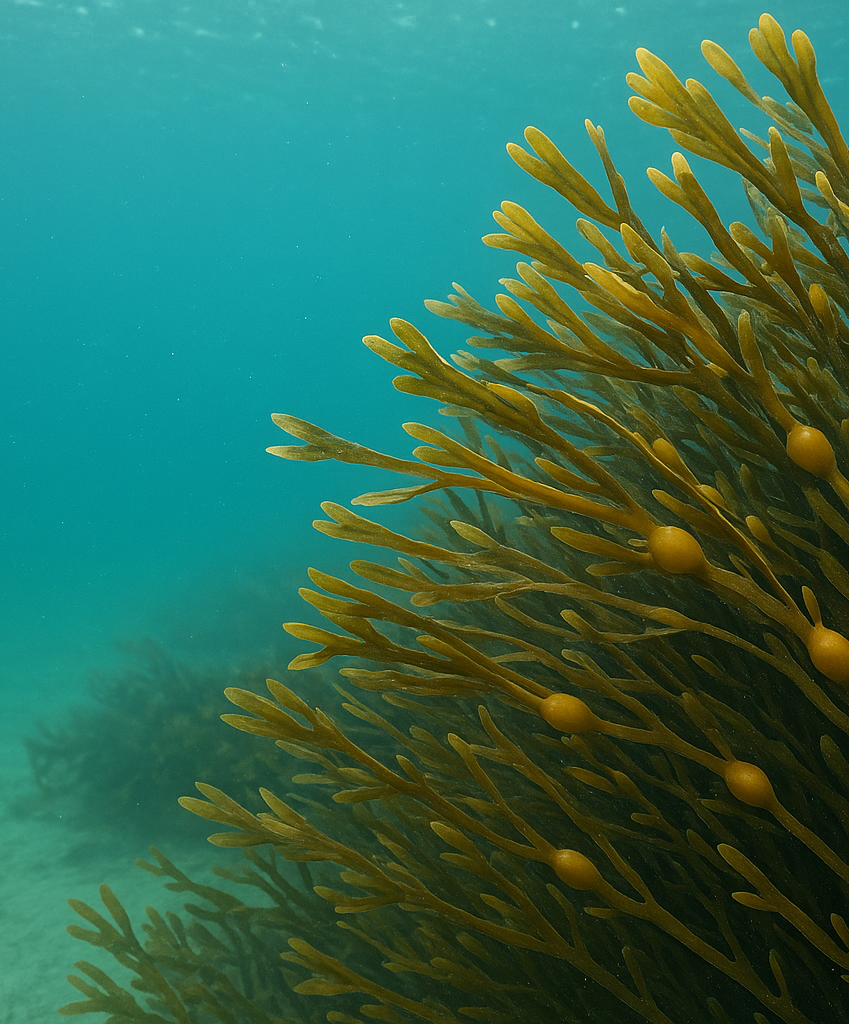
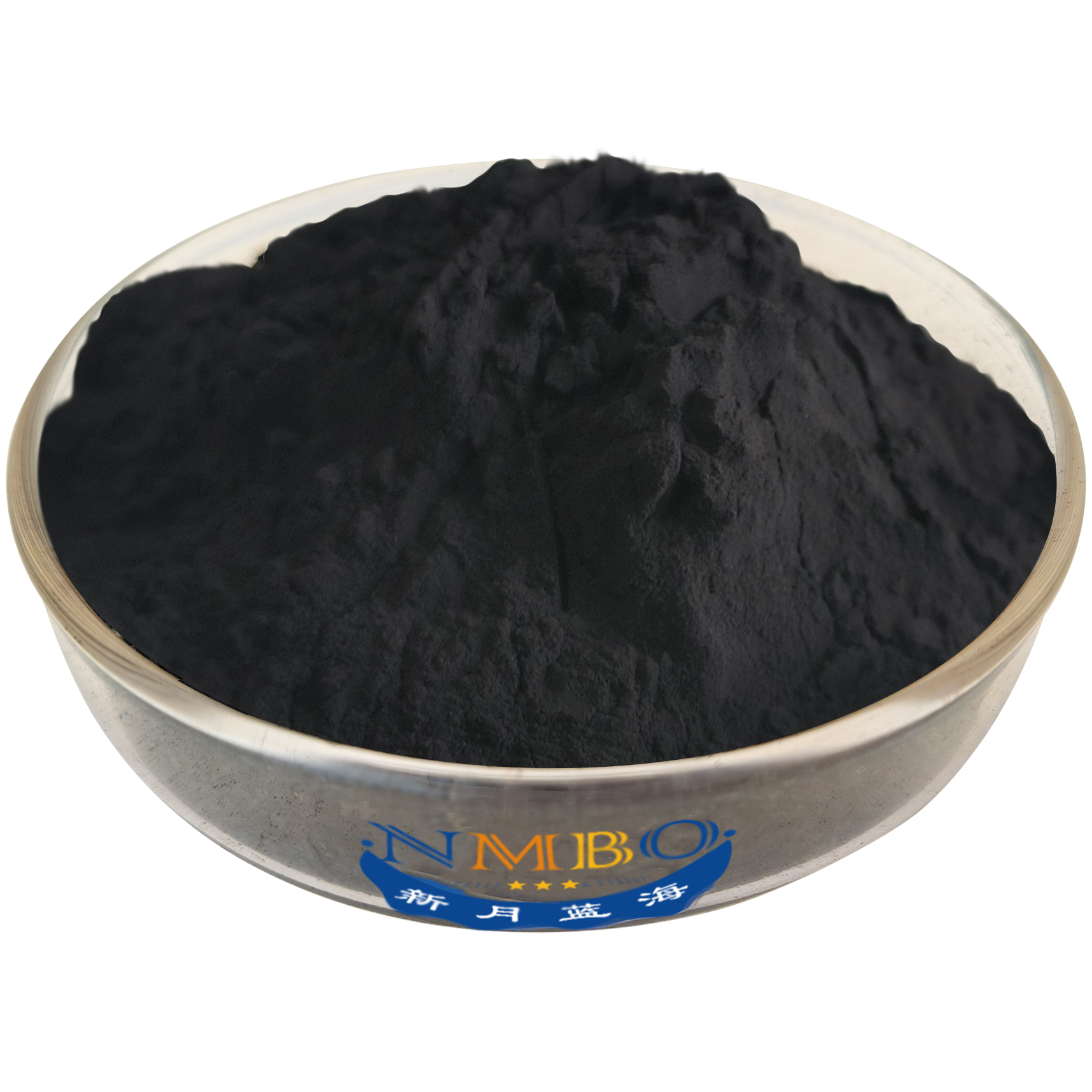
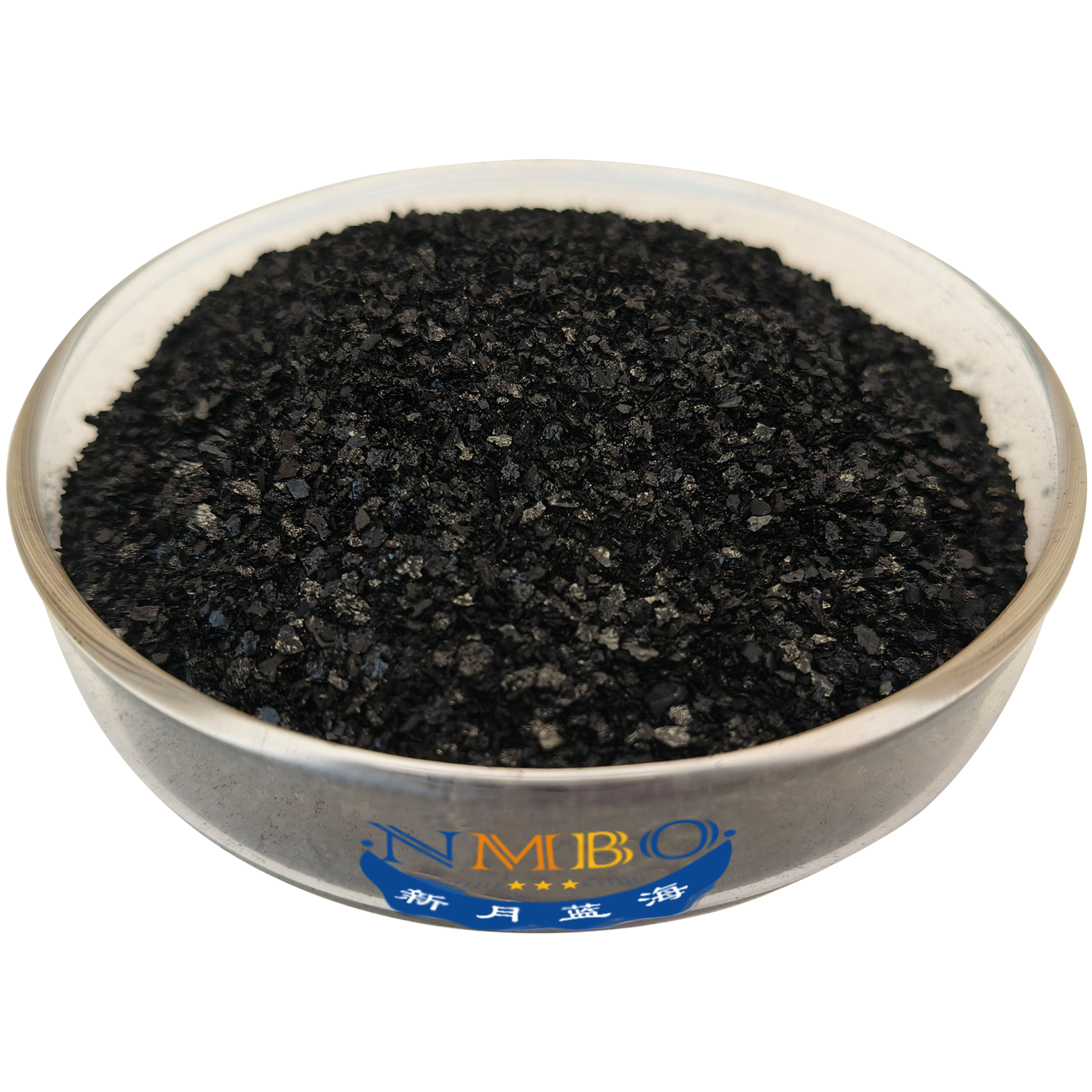
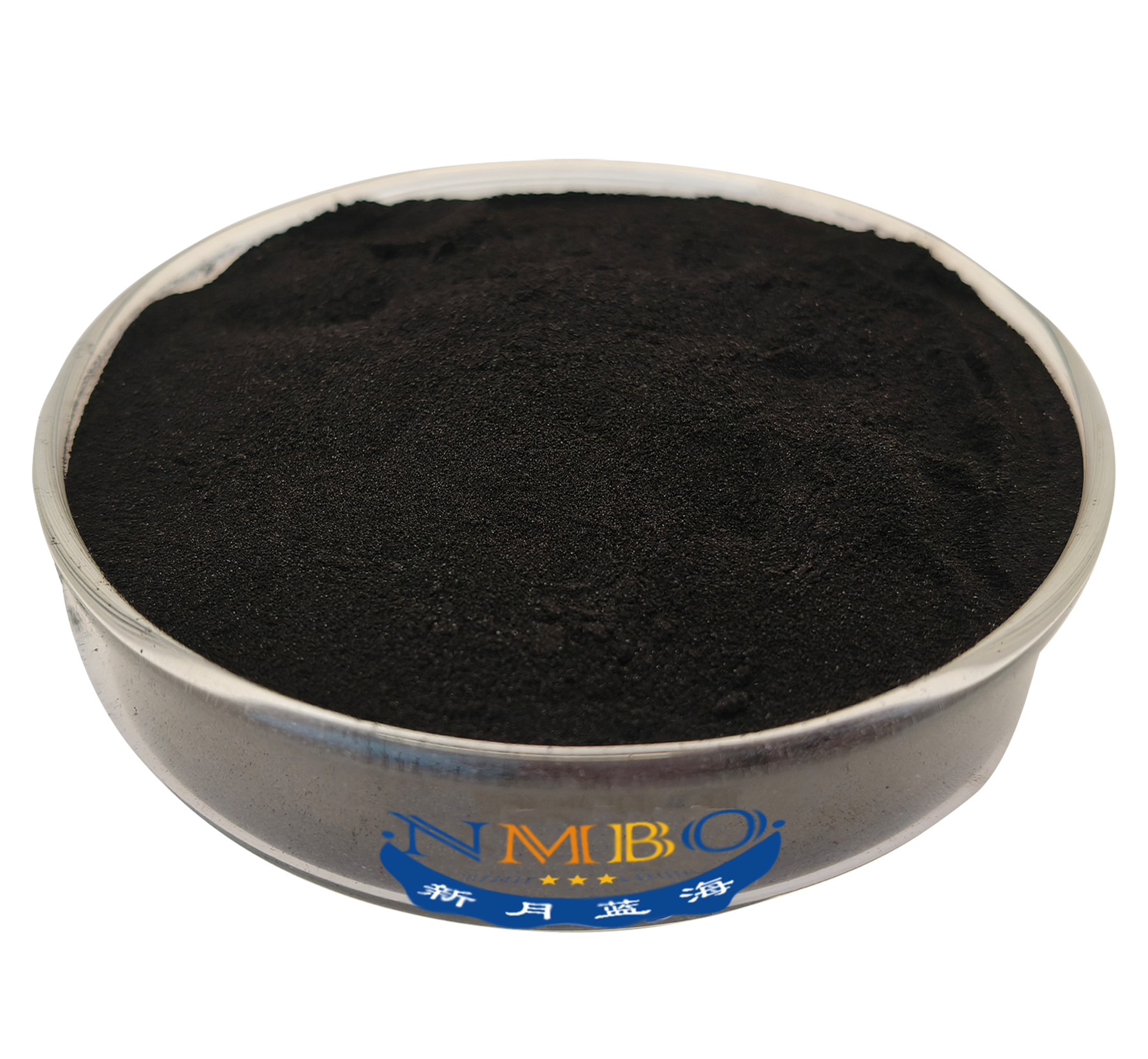
Seaweed extract fertilizer is a highly concentrated, bioactive product derived from marine algae (e.g., Ascophyllum nodosum) via enzymatic hydrolysis or cold extraction. It preserves key actives—natural plant hormones (cytokinins, auxins, gibberellins), alginates and oligosaccharides, amino acids, trace elements, and vitamins—functioning as a natural biostimulant to enhance plant metabolism, root development, stress resistance, and crop quality.
Seaweed extract fertilizer is a highly concentrated, bioactive product derived from marine algae (e.g., Ascophyllum nodosum) via enzymatic hydrolysis or cold extraction. It preserves key actives—natural plant hormones (cytokinins, auxins, gibberellins), alginates and oligosaccharides, amino acids, trace elements, and vitamins—functioning as a natural biostimulant to enhance plant metabolism, root development, stress resistance, and crop quality.
Seaweed extract fertilizer is a highly concentrated, bioactive product derived from marine algae (e.g., Ascophyllum nodosum) via enzymatic hydrolysis or cold extraction. It preserves key actives—natural plant hormones (cytokinins, auxins, gibberellins), alginates and oligosaccharides, amino acids, trace elements, and vitamins—functioning as a natural biostimulant to enhance plant metabolism, root development, stress resistance, and crop quality.
Seaweed Extract Fertilizer vs Traditional Fertilizer: Key Differences
Feature
Seaweed Extract Fertilizer
Traditional Fertilizer
Origin
Extracted from marine algae (bioactives preserved)
Synthetic chemicals or mined minerals
Main Function
Biostimulant effects + micronutrients
Direct NPK supply
Absorption
Rapid via foliar/drip; improves plant uptake physiology
Soil-dependent; slower, prone to losses
Stress Response
Enhances drought/salinity/heat tolerance
Often neutral or negative under stress
Soil Impact
Boosts microbes/enzymes; improves structure
Risk of acidification, salinity, leaching
Dose & Frequency
Lower dose, repeated precision shots
Higher dose, fewer applications
Quality Outcomes
Improves vitamins, sugars, protein (see meta)
Focus on biomass; quality less targeted
Economics/ROI
Synergizes with NPK; better cost–benefit in trials
External environmental costs can rise
Seaweed Extract Fertilizer vs Traditional Fertilizer: Key Differences
Feature
Seaweed Extract Fertilizer
Traditional Fertilizer
Origin
Extracted from marine algae (bioactives preserved)
Synthetic chemicals or mined minerals
Main Function
Biostimulant effects + micronutrients
Direct NPK supply
Absorption
Rapid via foliar/drip; improves plant uptake physiology
Soil-dependent; slower, prone to losses
Stress Response
Enhances drought/salinity/heat tolerance
Often neutral or negative under stress
Soil Impact
Boosts microbes/enzymes; improves structure
Risk of acidification, salinity, leaching
Dose & Frequency
Lower dose, repeated precision shots
Higher dose, fewer applications
Quality Outcomes
Improves vitamins, sugars, protein (see meta)
Focus on biomass; quality less targeted
Economics/ROI
Synergizes with NPK; better cost–benefit in trials
External environmental costs can rise
Seaweed Extract Fertilizer vs Traditional Fertilizer: Key Differences
Indicator
Traditional NPK Only
Seaweed Extract
Days to Flowering
28 days
24 days
Average Yield (kg/mu)
2200
2550 (+15.9%)
Disease Resistance
Moderate
Strong
Root Biomass
Normal
Strong
Fruit Uniformity
Medium
Improved
Top 5 Benefits of Seaweed Extract Fertilizer
Enhances Root Growth and Nutrient Uptake
Boosts Stress Tolerance
Improves Flowering and Fruit Set
Works with Other Fertilizers
Safe for Long-Term Soil Health
Top 5 Benefits of Seaweed Extract Fertilizer
Enhances Root Growth and Nutrient Uptake
Boosts Stress Tolerance
Improves Flowering and Fruit Set
Works with Other Fertilizers
Safe for Long-Term Soil Health
Top 5 Benefits of Seaweed Extract Fertilizer
Enhances Root Growth and Nutrient Uptake
Boosts Stress Tolerance
Improves Flowering and Fruit Set
Works with Other Fertilizers
Safe for Long-Term Soil Health
1. Faster Nutrient Absorption and Higher Fertilizer Efficiency
1. Faster Nutrient Absorption and Higher Fertilizer Efficiency
1. Faster Nutrient Absorption and Higher Fertilizer Efficiency
Unlike traditional fertilizers, which must undergo soil adsorption, ion exchange, or microbial transformation before nutrients can be taken up by roots and transported through vascular bundles, seaweed extract fertilizer—especially when used for foliar application—allows nutrients to be absorbed directly through leaves. This shortens the nutrient transport distance, accelerates uptake, and enables crops to quickly use the nutrients for metabolism. Studies have shown foliar absorption can be up to twice as fast as root absorption. Moreover, alginates in seaweed extract reduce the surface tension of water, form a thin film on leaves, and improve nutrient penetration into plant cells.
Unlike traditional fertilizers, which must undergo soil adsorption, ion exchange, or microbial transformation before nutrients can be taken up by roots and transported through vascular bundles, seaweed extract fertilizer—especially when used for foliar application—allows nutrients to be absorbed directly through leaves. This shortens the nutrient transport distance, accelerates uptake, and enables crops to quickly use the nutrients for metabolism. Studies have shown foliar absorption can be up to twice as fast as root absorption. Moreover, alginates in seaweed extract reduce the surface tension of water, form a thin film on leaves, and improve nutrient penetration into plant cells.
Unlike traditional fertilizers, which must undergo soil adsorption, ion exchange, or microbial transformation before nutrients can be taken up by roots and transported through vascular bundles, seaweed extract fertilizer—especially when used for foliar application—allows nutrients to be absorbed directly through leaves. This shortens the nutrient transport distance, accelerates uptake, and enables crops to quickly use the nutrients for metabolism. Studies have shown foliar absorption can be up to twice as fast as root absorption. Moreover, alginates in seaweed extract reduce the surface tension of water, form a thin film on leaves, and improve nutrient penetration into plant cells.
2. Solving Specific Agricultural Challenges
2. Solving Specific Agricultural Challenges
2. Solving Specific Agricultural Challenges
Seaweed extract fertilizer is particularly effective when root function is weakened—such as during seedling stages, late growth stages, or in saline-alkaline or drought-stressed soils where root nutrient uptake is inhibited. Foliar spraying can supplement deficiencies in time, strengthen plants, and improve yields. For example, applying seaweed extract to cucumber leaves has been shown to delay harvest end and increase average yield per mu by 15%. It is also more efficient for delivering trace elements like B, Mn, Mo, and Fe, as only a fraction of the dosage needed for soil fertilization is required for foliar application to achieve similar results.
Seaweed extract fertilizer is particularly effective when root function is weakened—such as during seedling stages, late growth stages, or in saline-alkaline or drought-stressed soils where root nutrient uptake is inhibited. Foliar spraying can supplement deficiencies in time, strengthen plants, and improve yields. For example, applying seaweed extract to cucumber leaves has been shown to delay harvest end and increase average yield per mu by 15%. It is also more efficient for delivering trace elements like B, Mn, Mo, and Fe, as only a fraction of the dosage needed for soil fertilization is required for foliar application to achieve similar results.
Seaweed extract fertilizer is particularly effective when root function is weakened—such as during seedling stages, late growth stages, or in saline-alkaline or drought-stressed soils where root nutrient uptake is inhibited. Foliar spraying can supplement deficiencies in time, strengthen plants, and improve yields. For example, applying seaweed extract to cucumber leaves has been shown to delay harvest end and increase average yield per mu by 15%. It is also more efficient for delivering trace elements like B, Mn, Mo, and Fe, as only a fraction of the dosage needed for soil fertilization is required for foliar application to achieve similar results.
Soil fertilization efficiency is often limited by factors like temperature, humidity, salinity, and microbial activity—nitrogen utilization rates are typically only 25–35%. Foliar application of seaweed extract fertilizer bypasses the soil, avoiding nutrient fixation and leaching losses, and can achieve over 70% nutrient absorption within 24 hours. With application rates just 1/10–1/5 of soil fertilization, farmers can reduce total fertilizer use by around 25%, minimizing the risk of soil and water pollution.
Soil fertilization efficiency is often limited by factors like temperature, humidity, salinity, and microbial activity—nitrogen utilization rates are typically only 25–35%. Foliar application of seaweed extract fertilizer bypasses the soil, avoiding nutrient fixation and leaching losses, and can achieve over 70% nutrient absorption within 24 hours. With application rates just 1/10–1/5 of soil fertilization, farmers can reduce total fertilizer use by around 25%, minimizing the risk of soil and water pollution.
Soil fertilization efficiency is often limited by factors like temperature, humidity, salinity, and microbial activity—nitrogen utilization rates are typically only 25–35%. Foliar application of seaweed extract fertilizer bypasses the soil, avoiding nutrient fixation and leaching losses, and can achieve over 70% nutrient absorption within 24 hours. With application rates just 1/10–1/5 of soil fertilization, farmers can reduce total fertilizer use by around 25%, minimizing the risk of soil and water pollution.
PRACTICE
PRACTICE
PRACTICE
⚪ Real-World Use Cases
⚪ Real-World Use Cases
⚪ Real-World Use Cases
Greenhouse vegetables (tomato): Seaweed extracts shorten time to market, generate early high-price loads, and strengthen shelf life and transport resilience.
Cereals & root crops: Foliar + root programs commonly deliver double-digit yield gains and better chlorophyll and water status under intermittent drought.
Greenhouse vegetables (tomato): Seaweed extracts shorten time to market, generate early high-price loads, and strengthen shelf life and transport resilience.
Cereals & root crops: Foliar + root programs commonly deliver double-digit yield gains and better chlorophyll and water status under intermittent drought.
Greenhouse vegetables (tomato): Seaweed extracts shorten time to market, generate early high-price loads, and strengthen shelf life and transport resilience.
Cereals & root crops: Foliar + root programs commonly deliver double-digit yield gains and better chlorophyll and water status under intermittent drought.
⚪ Real-World Results: Cucumber Field Trial (Seaweed Extract vs Traditional Fertilizer)
⚪ Real-World Results: Cucumber Field Trial (Seaweed Extract vs Traditional Fertilizer)
⚪ Real-World Results: Cucumber Field Trial (Seaweed Extract vs Traditional Fertilizer)
Indicator
Traditional NPK Only
Seaweed Extract
Days to Flowering
28 days
24 days
Average Yield (kg/mu)
2200
2550 (+15.9%)
Disease Resistance
Moderate
Strong
Root Biomass
Normal
Strong
Fruit Uniformity
Medium
Improved
Indicator
Traditional NPK Only
Seaweed Extract
Days to Flowering
28 days
24 days
Average Yield (kg/mu)
2200
2550 (+15.9%)
Disease Resistance
Moderate
Strong
Root Biomass
Normal
Strong
Fruit Uniformity
Medium
Improved
Indicator
Traditional NPK Only
Seaweed Extract
Days to Flowering
28 days
24 days
Average Yield (kg/mu)
2200
2550 (+15.9%)
Disease Resistance
Moderate
Strong
Root Biomass
Normal
Strong
Fruit Uniformity
Medium
Improved
🌍 Why Global Distributors Choose NMBO Seaweed Extract Fertilizer
🌍 Why Global Distributors Choose NMBO Seaweed Extract Fertilizer
🌍 Why Global Distributors Choose NMBO Seaweed Extract Fertilizer
Qingdao New Moon Blue Ocean Bio-Tech Co., Ltd (NMBO) provides high-quality seaweed extract fertilizers for foliar and soil application, certified by ECOCERT for both EU and NOP standards.
Qingdao New Moon Blue Ocean Bio-Tech Co., Ltd (NMBO) provides high-quality seaweed extract fertilizers for foliar and soil application, certified by ECOCERT for both EU and NOP standards.
Qingdao New Moon Blue Ocean Bio-Tech Co., Ltd (NMBO) provides high-quality seaweed extract fertilizers for foliar and soil application, certified by ECOCERT for both EU and NOP standards.
100% natural seaweed extract
Improve crop resistance and boost yields by 15-30%
Applicable to multiple scenes and crops
Export to: Middle East, South Asia, Latin America, North Africa, etc.
Fast international shipping with export documents
100% natural seaweed extract
Improve crop resistance and boost yields by 15-30%
Applicable to multiple scenes and crops
Export to: Middle East, South Asia, Latin America, North Africa, etc.
Fast international shipping with export documents
100% natural seaweed extract
Improve crop resistance and boost yields by 15-30%
Applicable to multiple scenes and crops
Export to: Middle East, South Asia, Latin America, North Africa, etc.
If you’re an agricultural input distributor, importer, or OEM brand looking for eco-friendly, high-efficiency fertilizer products, seaweed extract fertilizer is your next opportunity.
If you’re an agricultural input distributor, importer, or OEM brand looking for eco-friendly, high-efficiency fertilizer products, seaweed extract fertilizer is your next opportunity.
If you’re an agricultural input distributor, importer, or OEM brand looking for eco-friendly, high-efficiency fertilizer products, seaweed extract fertilizer is your next opportunity.